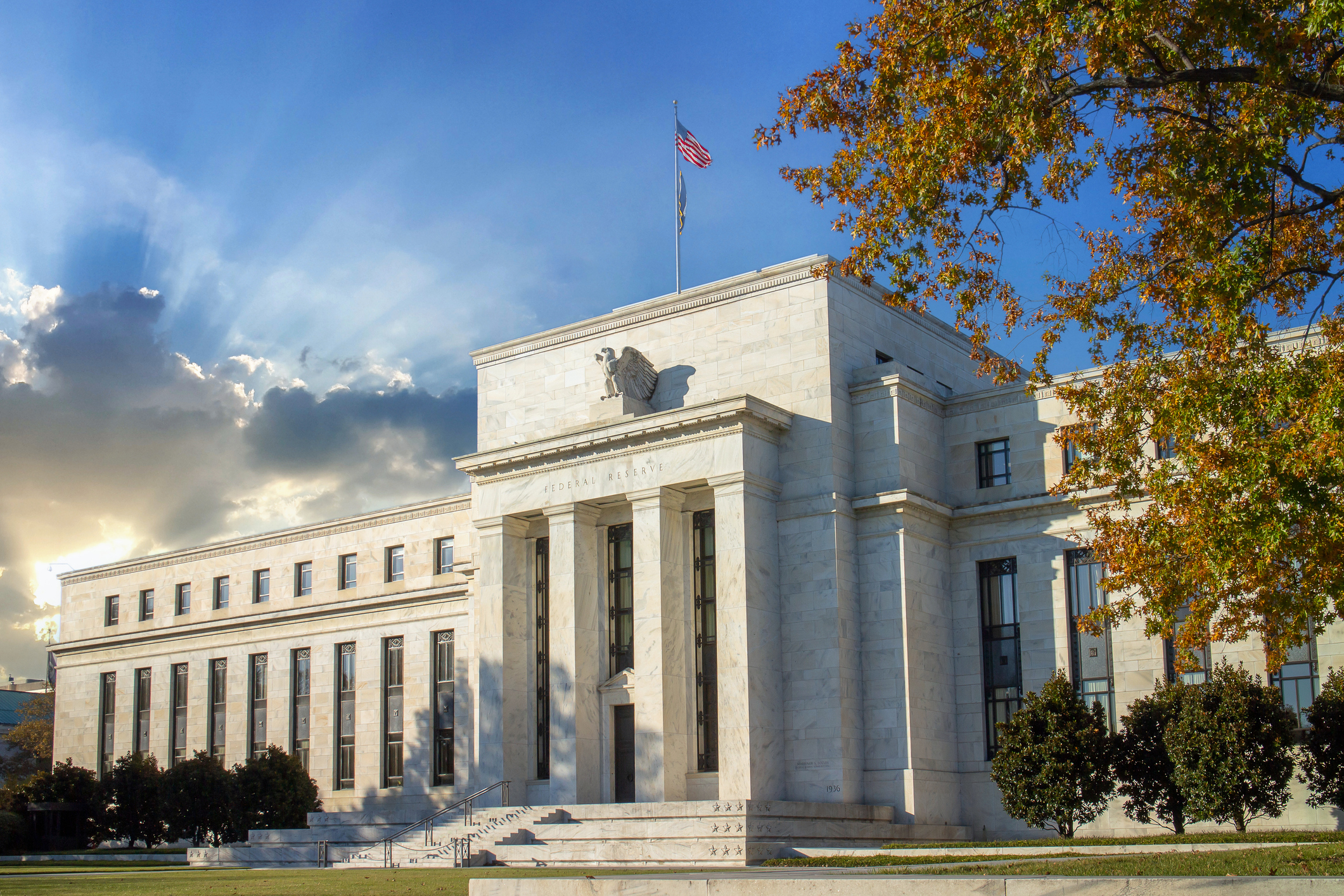
Among NSBA's top Priority Issues is how to ensure small-business' access to capital - a factor at the center of today's expected announcement from the Fed.
Among NSBA's top Priority Issues is how to ensure small-business' access to capital - a factor at the center of today's expected announcement from the Fed.
UPDATE, DEC. 10, 2025 | This afternoon, the Federal Reserve delivered the third consecutive interest-rate reduction, maintaining their outlook for just one cut in 2026.
The Federal Open Market Committee voted 9-3 to lower benchmark federal funds rates within a range of 3.5-3.75 percent. The Committee also changes the text of its statement, magnifying more uncertainty when it comes to future rate cuts.
The dissenting members of the Committee, as well as rate projections, highlight factions among policymakers, including whether weakness in the labor market or stubborn inflation represent the larger danger to the US economy.
Caught between the rock of holding down inflation and the hard place of fostering fuller employment, the Central Bank is working to balance its dual missions.
Today’s meeting follows the longest government shutdown in history, effects from which continue to affect the normal cadence and scheduled release of economic data driving decisions made at the Fed.
____
DEC. 10, 2025 | As the Federal Reserve heads into its final rate-setting meeting of the year, despite significant and public exposure of internal debate, an unusually divided Federal Open Market Committee is preparing for what appears to be another interest-rate cut.
For small businesses, in an economy where access to capital remains one of the most persistent challenges for entrepreneurs, any move that could ease borrowing costs is worth watching closely.
Fed Chair Jerome Powell is expected to push through a quarter-point cut, lowering the federal funds rate to 3.5–3.75 percent, and then signal a much higher bar for further easing.
While this “cut-and-cap” approach reflects caution among policymakers, it still represents meaningful movement toward reducing the financial pressures facing small firms.
RELATED | NSBA FIGHTS FOR SMALL-BUSINESS PRIORITY ISSUES - ACCESS TO CAPITAL
Access to capital has been a top priority for NSBA for years, and rising interest rates have hit small businesses disproportionately.
Unlike large corporations, small firms typically rely on short-term credit lines, variable-rate loans, and personal financing that move closely with Fed policy. High interest rates over the last two years have contributed to:
- Higher borrowing costs for startup expansion and day-to-day operations;
- Tighter credit standards at banks, particularly community lenders;
- Delays in investment, hiring, and equipment purchases; and
- Lower availability of working capital for businesses already operating on thin margins.
A modest rate cut will not fix these pressures overnight, especially given the Fed’s clear reluctance to pursue more aggressive easing. But a cut may begin to bring relief, particularly if financial institutions respond by modestly loosening credit conditions after months of tightening.
What makes this moment unique is how sharply divided Fed officials are: up to half of voting members of the Fed have signaled discomfort with cutting rates at all, citing stubborn inflation data and concerns that rates are not high enough to suppress price pressures.
Others fear the opposite, that weakening labor-market signals could accelerate unexpectedly, and waiting to cut would cause unnecessary economic damage.
This division matters for small businesses because it signals volatility in credit conditions, and potentially abrupt policy shifts in early 2026 depending on incoming data.
With inflation not yet moving firmly toward the 2 percent target, and with job-market cracks beginning to appear, the Fed may find itself pivoting quickly in either direction.
The Fed’s internal debate also comes against a backdrop of growing political pressure:
- President Trump has repeatedly indicated he wants lower rates and is seeking to re-shape the Board;
- A Supreme Court case next month will determine whether Fed Governor Lisa Cook can be removed for matters related to declarations of a primary residence on a mortgage loan application;
- Powell’s term expires in May, with a likely successor who may be more aggressive on cuts; and
- A more politicized Fed increases uncertainty for borrowers and lenders, making long-term capital planning even more challenging for small businesses.
NSBA will continue advocating for policies supporting stable, affordable access to capital for small businesses, working to dismantle old systems, where entrepreneurs are whiplashed by unpredictable rate swings or tightening credit markets.
While today’s expected rate cut may offer some near-term relief, the broader challenge remains: small businesses need sustained, reliable lending conditions, and a financial system that recognizes the unique role they play in job creation and economic growth. This includes:
- Stronger federal policies that expand access to capital, including SBA lending reforms and modernized financial regulations;
- Predictable monetary and fiscal conditions that allow small businesses to plan ahead;
- Reduced borrowing barriers that disproportionately impact startups and micro-businesses; and
- A more stable credit environment, especially for community-bank-dependent firms
As the Fed navigates a divided committee, shifting economic indicators, and political headwinds, NSBA will remain focused on ensuring small businesses are not left behind in the nation’s capital-access landscape.
Follow us for the latest from updates from Washington.