Small business is changing. Make sure your voice is part of the conversation.
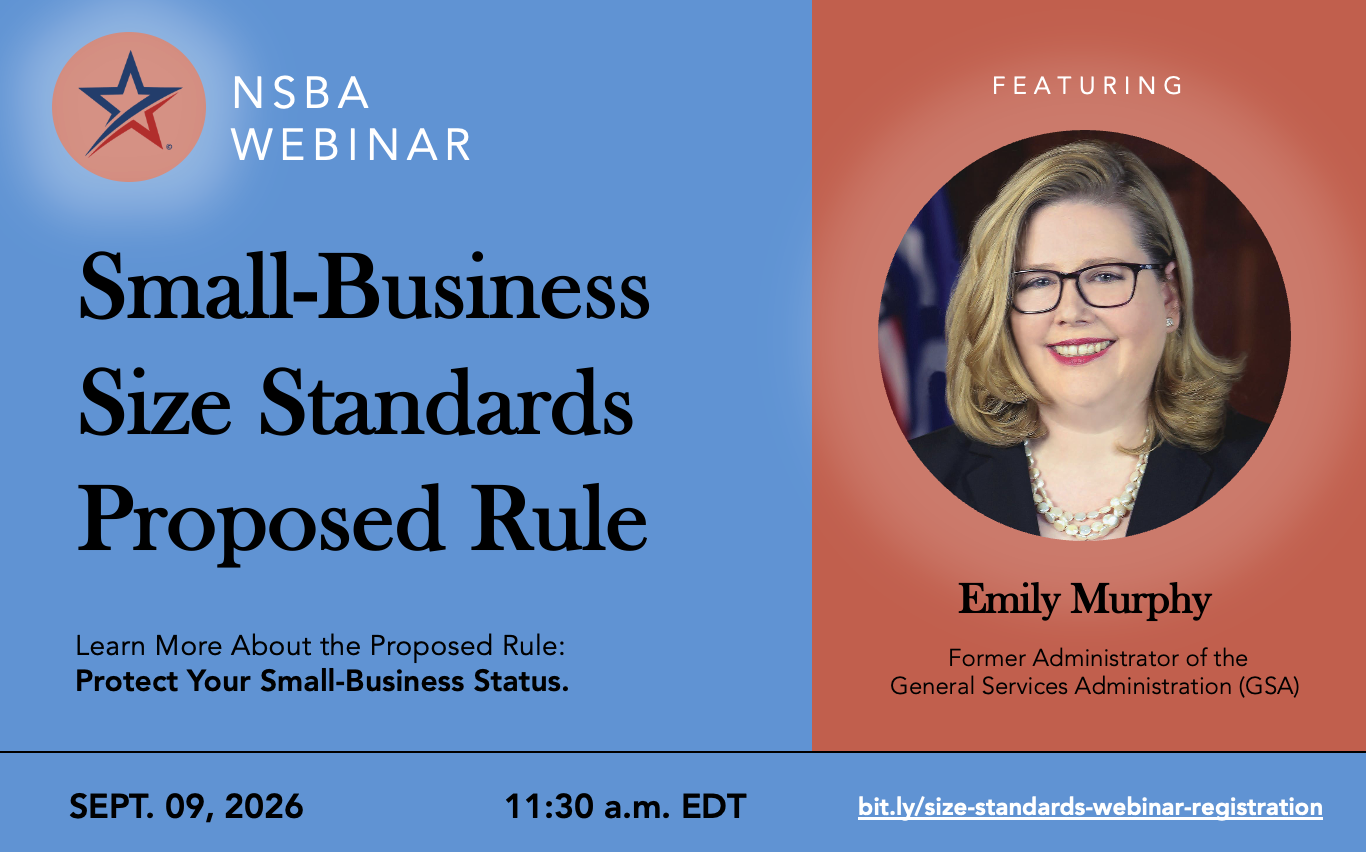
ON SEPT. 09, 2026, at 11:30 a.m. EDT, NSBA will host a policy briefing to examine a new Small Business Administration (SBA) proposal that could significantly change how the federal government defines and counts small businesses.
In case you missed it, SBA recently issued a proposed rule that would overhaul the current federal small-business size standards by reducing the number of North American Industry Classification System (NAICS) categories used to determine eligibility from nearly 1,000 to just 338.
The proposed changes could have significant implications for small businesses competing in the federal marketplace. Under the proposal, larger businesses could potentially qualify as small businesses under broader industry classifications, allowing them to compete for contracts and set-asides intended for small businesses. Those businesses could also be counted toward the federal government’s small-business contracting goals.
“Small Business, Big Changes: What SBA’s Proposed Size Standards Mean for Your Business,” will feature Emily Murphy, former Administrator of the General Services Administration (GSA), for a discussion of the proposal and its potential impact on small-business federal contractors.
Ms. Murphy served as GSA Administrator from 2017 to 2021, during which time she helped oversee an increase of more than $20 billion in GSA sales. She previously served as GSA’s inaugural Chief Acquisition Officer and as Acting Associate Administrator for Government Contracting at the SBA. Ms. Murphy also held several policy and leadership positions with the House Committee on Small Business.
Federal small-business size standards play an important role in determining which businesses qualify for programs and contracting opportunities designed specifically for small businesses.
Changes to those standards can therefore affect the competitive landscape for entrepreneurs seeking federal contracts. If larger companies are newly classified as small businesses under consolidated or expanded NAICS categories, small-business contractors could face increased competition for contracts and set-asides.
For NSBA, ensuring that federal policies preserve meaningful opportunities for America's small businesses remains a central advocacy priority. The organization has consistently called for federal regulations and policies to account for the unique challenges faced by small businesses and to ensure that government programs designed for entrepreneurs actually serve the small-business community.
NSBA’s upcoming webinar will provide small-business owners and federal contractors with an opportunity to better understand what the SBA proposal could mean for their businesses and the federal contracting marketplace.
____
As the SBA considers changes that could reshape the federal definition of “small business,” NSBA encourages small-business owners to stay informed and engaged in the policy process.
The briefing will take place Wednesday, Sept. 9, 2026, at 11:30 a.m. EDT.
Register here.